

My Crone Era
Midlife is having a moment

Are you a woman?
Do you know a woman?
Then you should know about this.
Menopause is having a moment.
A quick note here to the men, if you are even still reading this: please, for the love of all that is holy — don’t be weird about this. Don’t roll your eyes or check out at the mention of “women’s issues.”
We have been sitting through commercials for your boner pills for decades, and we’re cool with it.
Gen X is going through menopause, and we are not going quietly. Broadly speaking, our generation has always been fiercely self-reliant, cynical, and angsty. We watched the Challenger blow up, and now we’re just wondering what fresh hell this is. As a result, menopause is getting more attention than ever.
The topic seems to have burst out of the shadows, where it was once mentioned only in hushed tones and knowing glances. It was a major plot point in the recent Jon Hamm series, Your Friends and Neighbors. Menopause books are hitting the bestseller lists instantly. I drove by our local theatre the other day; it was opening night for Menopause: The Musical. There is a risk of overexposure; just another cash grab for products making unreasonable promises, but Tressie McMillan Cottom got to the heart of it in the New York Times recently:
Perimenopause was nowhere near my radar — and then my health went off the rails, and I had no clue why. My world turned upside down overnight.
There were the heart palpitations that made me wonder if I was having a heart attack and sent me for an EKG. The vertigo was so intense that my husband had to half-carry me down the hallway of the Urgent Care for stroke testing. The night sweats and hot flashes left me soaked and panting, staring at the ceiling for hours, losing my mind to insomnia and wondering if my lifelong fear of spontaneous combustion was coming to fruition. The joint pain in my shoulder meant I couldn’t lift my arm, and then the intense pain travelled to my hip, so I tried to get off the couch and quickly found myself lying on the ground. The brain fog meant that I couldn’t remember the names of my closest friends, or words like phone or grocery store, and I was terrified that I had dementia.
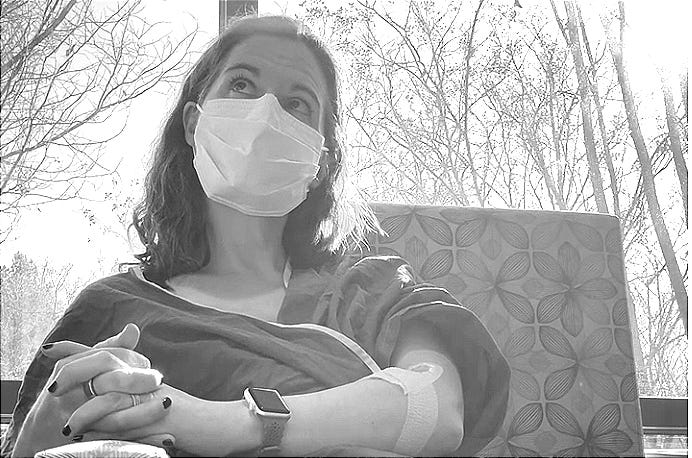
And then there are the really random things. Like the dark line around my lips that makes me look like I’m constantly wearing 90’s goth lip liner. My ears leak so much fluid at night that the creepy sensation wakes me up, and I assume my brain is liquefying. Yep. That’s perimenopause, too. I’m not going to discuss the changes in sexual health that can happen in this phase, but they are deeply frustrating. (I’ll keep those details to myself, since that’s not a headline I want to see on TMZ — Whatever Happened to the Doubtfire Girl’s Vagina?)
It felt like my body was betraying me, but my mind was most problematic of all. For a person who has had lifelong anxiety, it seemed like this time, I really had lost it. The darkness was overwhelming. It differed from depression (I know that old friend well), but this was more like I was just…gone. I’d wake up many mornings with a constant refrain in my mind — where did I go? I’m not in here anymore.
For a while, I was gaslighting myself into thinking I must be doing something wrong, and that’s why life felt so unmanageable. If I just did more breathwork, or squats, or optimized my microbiome, I wouldn’t be suffering like this. It was my fault somehow, and I was ashamed.
I went through several doctors to find someone who could help me. I was dismissed, patted on the knee and told that “getting older was hard.” Notably, one doctor repeatedly denied me medical treatment, telling me I was too young for perimenopause, regardless of my long list of perimenopausal symptoms. When I said I had done some research on hormone replacement, she said, “I’m not going to give you a prescription just because you listened to a podcast.”
When I finally got assertive and made some demands, she said, “Wait, you’re 46?” She hadn’t even bothered to look at my chart. (Average age of menopause is 50. Perimenopause begins in the 5-10 years before that, so I’m right on time. I didn’t bother being flattered that she thought I was in my 30s.1)
That doctor eventually gave me a couple of prescriptions, but I had to wait until we moved to Canada to get the full medical care I needed. I’m lucky to live in British Columbia, where provincial healthcare fully covers hormone replacement therapy: we walk out of the pharmacy with our prescriptions for free.
While it is tempting (and quite satisfying) to blame individuals, this problem is rooted in the medical system — fewer than one-third of American OB-GYN residency programs offer any menopause curriculum at all, and of those that do, doctors-to-be receive fewer than 5 lectures on this topic.2
Fewer than 7% of surveyed OB/GYN residents reported being "adequately prepared" to address menopause symptoms.
That’s absolutely bonkers for something half of their patients will experience.
I share this experience not because it’s unique, but because it’s quite common — so many women in my cohort have told me they are on a very similar path. I’ve had it easier than many, and worse than some. But I keep hearing the same pattern: we never knew it was coming.
We didn’t know what to look for; we didn’t know we needed to advocate for ourselves. We didn’t know that we would need to study the research, wade through decades of false information, and learn pretty much everything from Reddit. We didn’t know how often we’d hear that our pain can’t be that bad, that we should get over it and accept that aging sucks. I’ve never been so pissed off at someone for suggesting I do yoga — and I’m a yoga teacher.
I can’t change the medical system, but I can say the things I wish someone else had said to me. I hope that if you’re a young woman, you ask older women about their experiences. Older women, we have to be shamelessly honest about this, because we are suffering from the shame and silence of those before us. (Yep, we have to tell them about clitoral atrophy.)
Fellas — again — just be cool.
I always planned to be one of those all-natural hippie ladies who aged without medical intervention, floating around gracefully in my muumuu, making organic soups and saying wise, hard-earned things about life.
And since I don’t dye my hair or get Botox, I assumed that meant I’d rawdog this menopause thing.
But if this were a movie, this is when they would smash cut to me literally begging doctors for a prescription.
I don’t love taking any kind of medication, but I do love that I feel like myself again. I love that I’m not in pain. I love that my brain fog has cleared enough for me to find the words to write this letter. While it’s not a quick fix, and I have ongoing issues that need to be managed, there is one clear truth:
Menopausal Hormone Therapy gave me my life back.
I consider aging to be an honour; I’ve lost enough friends to know that not everyone has this privilege. But I am realistic about what ageing means, and I am embracing my crone era. Things change, and change can be difficult. I’m loving my body through the “composition changes,” that mean I now have a jiggly belly. I’m patient with my constant need to have reading glasses within arm’s reach. I’m not trying to be 25 years old again (no thank you, being young is terribly hard), I’m just trying to age in a way that feels like me.
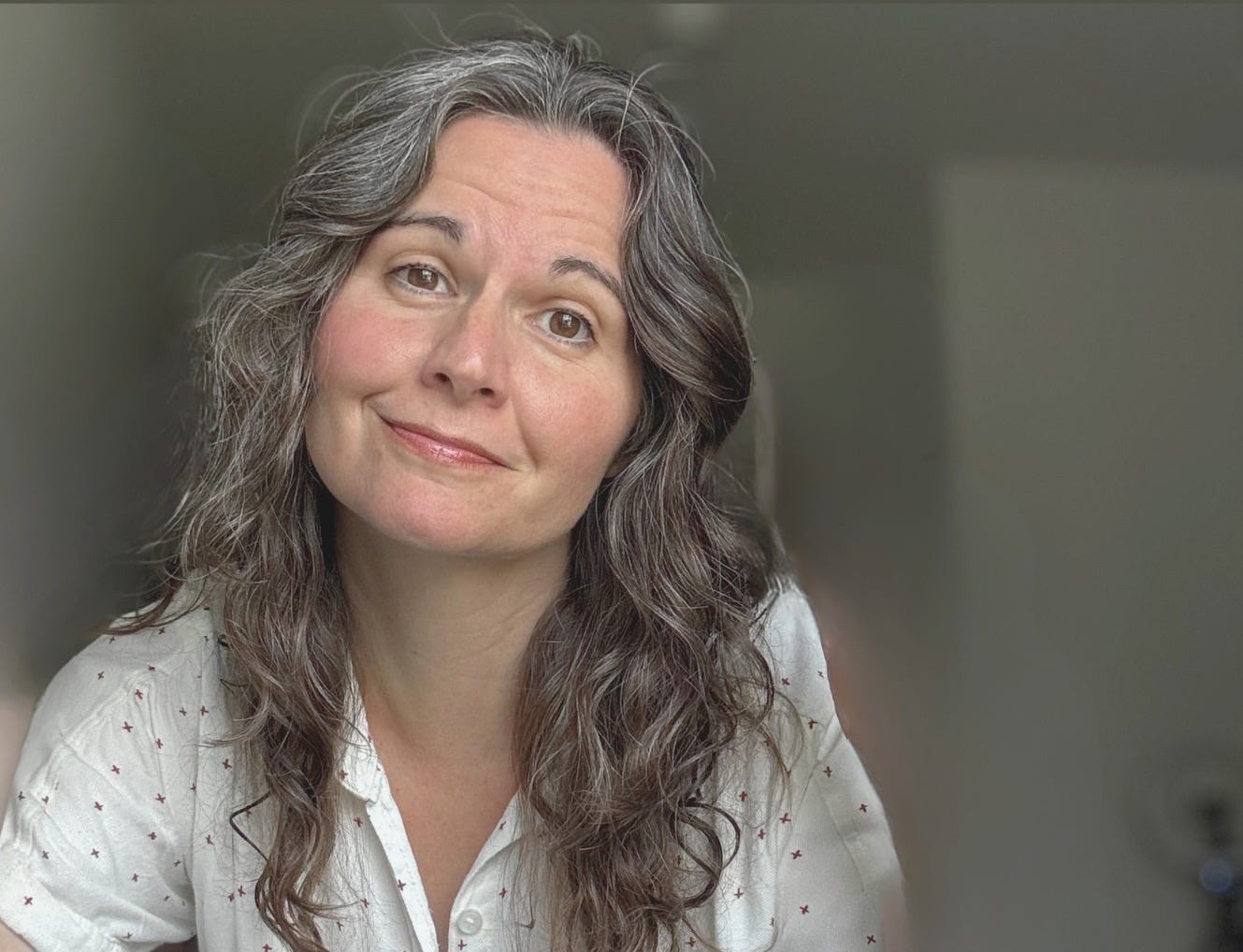
The image of the crone has long been used as a devaluing insult — a withered and frightening old hag meant to scare children in fairy tales. So I love that the term is being reclaimed to define an empowered and wise being. It’s no longer derogatory; rather, it’s autonomous, full of compassion, and severely lacking in fucks to give.
So bring on the crone, baby; there is such beauty and wisdom all around. I can still own all those hard-won lessons and make my soups — with an MHT prescription in the pocket of my muumuu.
I’ll leave you with the sobering words of Melinda French Gates in her recent article Women, We Deserve Better Than This
Early in the 20th century, childbirth in America looked very different than what you’ll find in most labor and delivery wards today.
Many hospital births involved “twilight sleep,” a cocktail of drugs that rendered a woman unconscious for delivery. If she started thrashing, as women often did, she could be tied to the bed. She had no loved ones in the room to advocate for her, and no voice in the process. Just drugs, disorientation and, in the end, a baby she had no memory of delivering.
Most of us look back on that era with a shudder. It’s hard to imagine how we ever came to accept a practice like that as standard.
I sometimes wonder if my granddaughters will have a similar reaction when they look back on the way our health care system approaches menopause care today.
~ NYTimes: Melinda French Gates: Women, We Deserve Better Than This ~
Thank you for reading, Friends — especially for the dudes that made it all the way to the end. I think it’s really impressive when you endeavour to be someone your sisters, friends, or partners can talk to. I wish I could give you all gold star stickers.
Comments are open if you want to say hi. Or, for the introverts, you can just hit the heart button, and I consider that like a cute lil’ wave.
Much love,
~Lisa
People can go through menopause in their 20s or 30s, so age is irrelevant.
https://menopause.org/wp-content/uploads/press-release/lack-of-menopause-education-for-residents.pdf
Right On, Lisa! From your 62 year old postmenopausal friend! I am grateful beyond measure to be experiencing this chapter where it's OK to not give any fucks about the incredible bullshit in this world! Big Hugs to You. 🩵
Thank you for writing so honestly and earnestly about a subject that doesn’t get enough attention.
P.S. Yes, I read the whole column.