


The last time I wrote to you, I slipped in a casual reference to when I lived in the Menendez murder house.
Some of you had questions.
I actually got texts from a couple of friends who had never heard this story. Some were in all caps.

I wrote about this in my first book, but I figured I might as well tell this story here. (No, I don’t require my friends to read my books. That would be weird.)
The following is an excerpt from You Look Like That Girl — it has been edited for length and clarity and because when you re-read a piece you wrote a decade ago, you can’t help yourself and must fix some things.
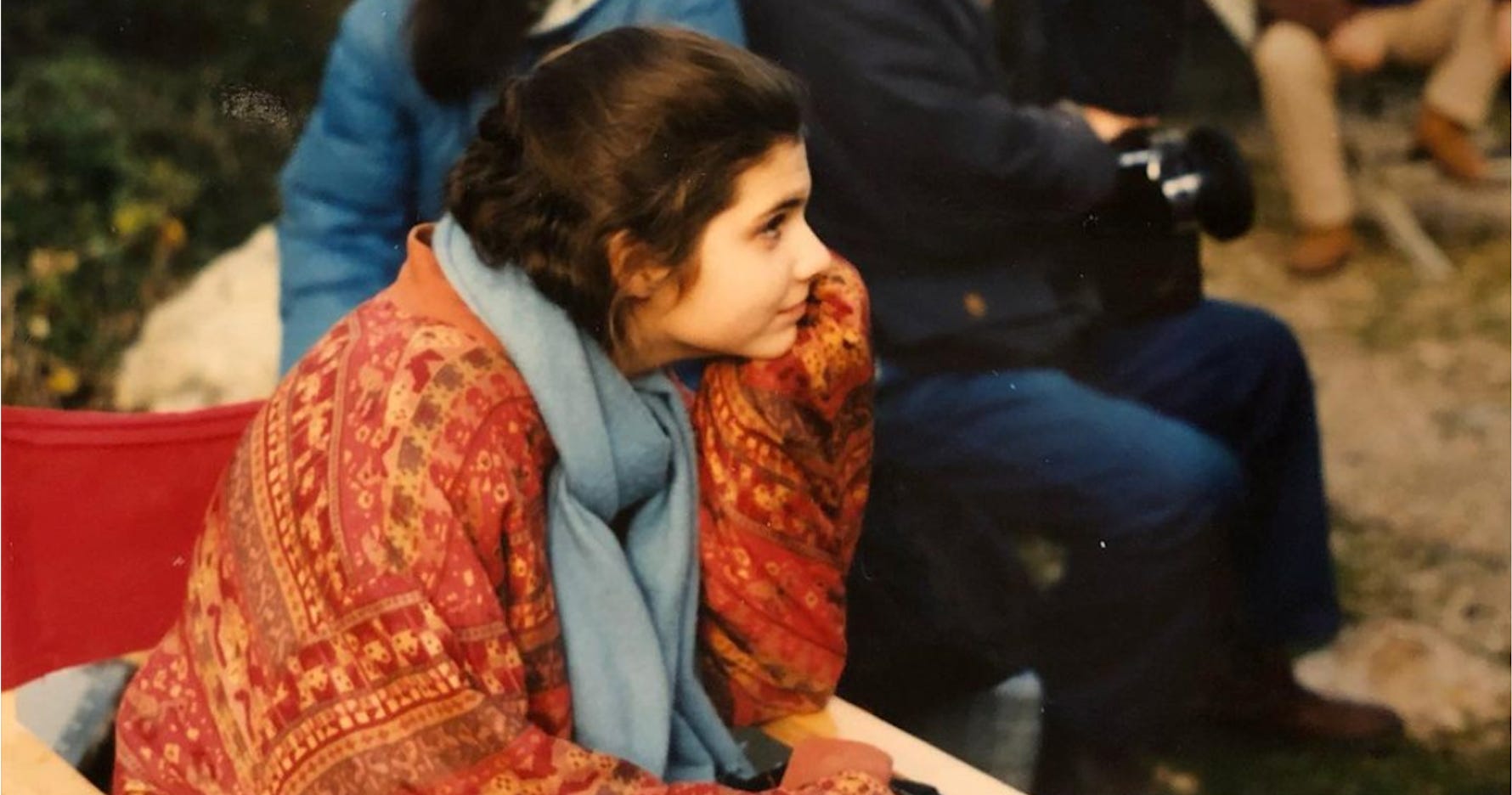
When I was about thirteen years old, I worked with a producer who was relocating to New York for a few months after we wrapped. She and her screenwriter husband needed a housesitter.
It was 1993, and my mother and I were happy to oblige; their mansion in Beverly Hills was a significant upgrade from the studio apartment at the Oakwood corporate housing in Burbank where we had been living.
There was a minor hitch about the place, but the producer was sure we wouldn’t mind: it was the house where the Menendez brothers had killed their parents just four years earlier.
After the murders, ownership of the house had gone back to the bank. Therefore, our friends had gotten quite a deal on it. The house was about 9,000 square feet and had twenty-three exquisitely decorated rooms. If those felt too confining, there were manicured grounds, a pool, a tennis court, and great trees to climb. The place was so enormous that the producer had decided to continue employing the live-in maid while we were there, just to help us take care of it. Maria had her own wing of the house, near the kitchen.
The tennis court had one of those automatic ball shooters so that one can work on one’s backhand before the ladies come over for tiny sandwiches that the maid brings out on a sparkling silver tray. I spent hours outside trying to master that machine while stinging, gray ash from the L.A. fires floated down angelically around me. Los Angeles frequently burns in a phenomenon nonchalantly called “fire season,” and the Santa Ana winds carry the ash even into the exclusive 90210 zipcode. I’d play until the burning in my lungs got to be too much, and then retreat to the air-conditioned mansion to cool off by lying facedown on the marble entryway floor.
Besides burning ash, there was another obstacle to spending time outside. Graveline Tours frequently cruised the house, telling tourists the chilling tale of the brothers who shot their parents in cold blood. The decked out hearse stopped in front of the house as the windows rolled down and sightseers stuck their long-lens cameras out.
The tour guide detailed the slayings through a speaker.
“On August 20, 1989, Lyle and Eric, who were twenty-one and eighteen at the time, allegedly shot their parents to death in this very house. Jose was shot point-blank in the back of the head. Kitty, who attempted to run for her life, was shot several times before she died. The brothers then came out to this very lawn out front here, crying and wailing that someone had killed their parents…”
I heard the monologue so many times I could have given the tour.
The house was a particular hot spot at this time, because the brothers were currently on trial. People apparently felt that it might help their cause to stand in front of the house and yell at us, “Lyle and Eric are innocent! It was self-defence for years of abuse in that house of horror!” They came at all times of the day and night, pleading for the lives of these boys they didn’t know. They shook the gate and begged for their mercy. They held up handmade signs and sobbed. I wasn’t sure how to explain to them that I had no control over the legal details. I just slept in Lyle’s bedroom, that was all.
Surprisingly, the house was not that creepy. It didn’t feel like a place of torture and murder. You expect that from dark places with low ceilings, not from a house with a brightly wallpapered sunroom and a restaurant-quality kitchen. How could terrible things happen in a place with a screening room that was fully stocked with movies that were still in the theatres?
The maid seemed unbothered by it all, so I tried to take my cues from her. Maria was a tiny, quiet woman who seemed to simply appear in the middle of a room without ever approaching. At first, the idea of having “help” that was always around was wildly unnerving. Home was supposed to be the place I could walk around in my underwear or pick my nose in privacy, but this was like having company all the time. The kind of company that wore a crisply pressed uniform and raked the plush carpeting with a little tool after I walked through the living room.
Maria was endlessly intriguing. I didn’t have a ton of friends, since we were bouncing back and forth between Canada and the US, moving to a new filming location every few months. So I followed Maria around as she did her work, attempting to befriend her, belly-flopping on the down-filled designer pillows. Maria didn’t show much interest in me beyond saying, “Excuse me, Missus,” as she re-fluffed everything that had been in my path.
When Maria went home for her day off every week, I would stand outside the door to her quarters and try to guess what was inside. What do you keep in your work bedroom? What do you need for your half-life? Maybe it was a sad place, covered in photos of the children that she had to leave behind, so that she could dust the original Botero statues in the foyer. Or maybe it was her secret hideaway, removed from the constraints of family responsibilities, where she could decorate to her own taste and keep all the things she didn’t want to share. I never got the guts to go in and see how Maria lived. I would just touch the door to her room, outlining the grooves in the heavy wood and wonder how she managed it.
Maybe everyone felt split in two by their work, feeling, as I did, that wherever we went, we were always leaving an important part of ourselves behind.
The master bedroom had two large, connecting bathrooms. One was drenched in pink marble and the other in black marble. Before she left for New York, our producer friend said that she never used the giant pink bathtub. She explained that Michael Jackson, from whom the Menendez family bought the house, surely used to bathe the monkey in that tub. She also pointed out that Elton John had owned the house before The King of Pop, so who knows what had gone on in there?
There was just no way that tub could ever get “clean-clean” even with Maria’s meticulous attention. She advised me to use one of the other nine bathrooms for my bathing needs. The fact that the tub disturbed her more than the patricide/matricide was kind of surprising.
Despite the fact that the house was a far cry from anything I had ever known, the mansion became just like any home after a while. I comfortably bounded up the grand curving staircase, taking the steps two at a time. The marble bathroom became less impressive as I realized that it was no more functional than the Formica I was accustomed to. I knew the exact timing of how to press the button and run out of the ten-foot-tall, mechanical iron gate before it slammed shut. Opening the massive entry doors became as routine as opening the hollow plywood doors of the Oakwood apartment 202 G. My suitcase was there, so I was home.
One day, I was stretched out on the leather couch, flipping channels on the theater screen that acted as a television. There was some Hollywood pseudo-news show that was giving an update on the ongoing trial of the Menendez brothers. Suddenly, a black and white photo of the murder scene flashed on the nine-foot screen; a body lying on the floor, one on the couch, covered in dark splotches of blood. The photos made me catch my breath, and my skin got prickly. I started pondering the fragility of life…but, wait. Those windows in the photo…they looked familiar. I glanced behind me. Yep. It was this room. I looked down at the floor next to the couch I was sitting on. Sure, it was a different couch, but it was in the same position. They were right here. Bloody. Swollen. Dead. Massacred. I turned off the TV.
I watched the protesters outside the gates of the house and wanted to invite them in to sit on the couch and look at that photo. I didn’t know what the answer was, I didn’t know if it was prompted by insanity or greed or self-defence. All I knew was that something very, very sad had happened in the living room.
The producer had assured us that the house had been remodelled since the murders, and somehow that made everyone feel better. I’m not sure why. That’s a very L.A. mindset, thinking that a facelift changes the soul. There is an assumption that what something looks like on the outside is the important part. The content, the suffering, and the history don’t matter.
So, we accepted the house for what it was: a place we pretended was home, while I went to work and pretended to be other people. We pretended that the remodel changed the house in some fundamental way, while the people crying at the front gate pretended that there could be sense made of any of it.
So that’s my story. I’ve not watched any of the recent films or documentaries on the murders, I feel like the levels of suffering are more than I can handle at the moment. I had assumed the world had moved on from this tragic story, but apparently the army of Menendez brothers defenders have just moved from the gates of 722 North Elm Drive to a more central location — TikTok. Interestingly, many of these modern defenders were not even born at the time of the murders.
So it seems that everything old is new again.
The brothers were originally sentinced to life in prison without parole, but in May of 2025, they were resentinced, offering the possibility of parole. In August 2025, Lyle and Erik were both denied parole for rule violations and the belief that they pose an unreasonable risk of danger to the community. They have both now been in prison for 35 years.
The brothers standing in front of their (and for a while, my) front door.
Thank you for being here, Friends. Thanks for reading.
Comments are open if you’d like to say hello, or tell us about the weird places you have lived.
Much love,
~Lisa
Lisa, I love your writing style. It goes from serious to humourous to thought provoking in one paragraph. What a history that house has - Elton! Michael! Monkeys! And... the other stuff. Thanks for sharing that very quirky (in the best way) tidbit of your life!
Wonderfully written, I love it :-)
If you stop to think about it, and generally one doesn't, or maybe shouldn't, weird stuff has happened where you are or close to it, wherever you are. When we visit ancient monuments, historic buildings, and the like, generally it's the building itself we're there to see. Admire the architecture a bit, enjoy the gardens (if there are any), have a coffee in the tea shop. Putting this out there, I'm in the UK, generally ALL our historic buildings have gardens and somewhere for coffee, I've drunk black Americanco in lots of Cathedral tea rooms. But, what happens when we visit battlefields or other historic sites? That's all about what happened. I've been to the western front in Belgium a few times, I've walked over the ground where the trenches were in 1914/18, actually the bit where my grandfather was killed. It's a nice piece of woodland and farmland now, there are houses, with nice gardens (yes, there's somewhere to get coffee too). The people in the houses, they're living right on top of a first world war battlefield, lots of people definitely died under their living rooms. I'm sitting in my living room in the Cotswolds, I can pop out for a walk, cross the road, by the fields...archaeologically we know under those fields is a big Anglo-Saxon cemetery. It's not something I conciously even think about, but dead people from the 800s means inevitably, live people in the 800s. Where I'm sitting writing this there might well have been people the best part of a two thousand years ago, sitting around the fire, doing, well, whatever counted as fun for the Saxons.